DisclosureThis article contains affiliate links. If you buy through them, we may earn a small commission at no extra cost to you. Learn more
In this article
A small kitchen isn't the problem — a cluttered one is. With a few simple habits and one or two well-chosen storage pieces, even a cramped kitchen can feel calm and easy to cook in.
1. Zone by how often you use things
Keep everyday items (knives, cutting boards, core spices) at arm's reach. Things you use a few times a month, like cake tins or a hot pot, can live on high shelves or at the back of cabinets.
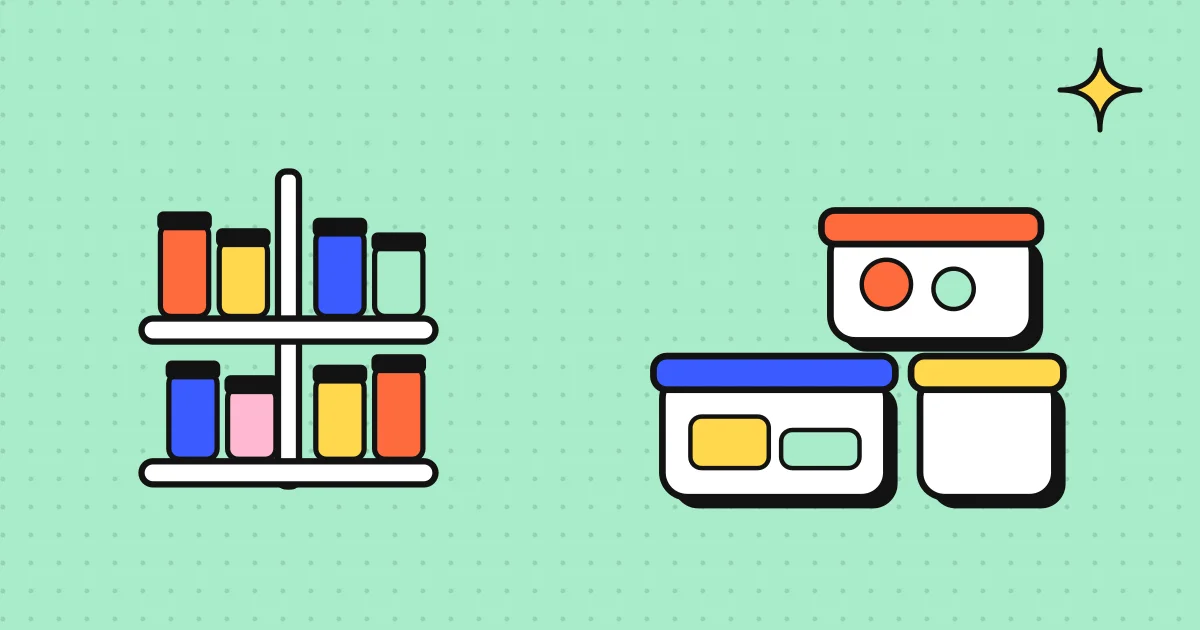
2. Rescue dead corners with a turntable
The back corner of a cabinet is where jars go to be forgotten. A rotating rack brings everything forward with a single spin.

Nordik
Nordik 2-Tier 360° Rotating Spice Rack
4.4A two-tier turntable for cabinets or countertops — reach the jar at the very back with a single spin.
- Size
- Ø 26 × 20 cm
- Material
- ABS plastic
- Tiers
- 2
3. Standardize your food containers
Matching containers stack neatly and can take up far less fridge space than a jumble of odd shapes and sizes.

Fresko
Fresko Glass Food Containers (Set of 5)
4.6Heat-resistant, microwave-safe glass with airtight silicone-sealed lids — ideal for weekly meal prep and a tidier fridge.
- Capacity
- 370–1040 ml
- Material
- Borosilicate glass
- Pieces
- 5 containers
Pros
- Won't absorb odors, microwave-safe
- Easy to see what's inside
Cons
- Heavier and more fragile than plastic
4. Label everything
A label with the contents and the date you opened it helps everyone put things back in the right place — and stops food from expiring unnoticed.
5. One in, one out
Before buying another gadget, ask whether something you already own does the job. A versatile air fryer, for example, can replace both a toaster oven and a frying pan.